Elevator Steel Belts: The Complete Encyclopedia

目次

エレベーター牽引ベルト, also known as Elevator Steel Belt, is used under different names by various elevator brands. コーン そして TK Elevator commonly refer to it as Elevator Suspension Belt, while オーティス typically uses the terms Elevator Flat Steel Belt or Elevator Gen2 Belt.

If you work in the elevator industry, you know that traction technology is changing. The traditional round steel wire ropes are steadily being replaced by Elevator Traction Composite Steel Belts (often simply called elevator steel belts or elevator traction steel belts).

But what exactly goes into these belts? How do you calculate the required length? What is the difference between an Otis belt and a Schindler belt? In this comprehensive guide, we will leave no stone unturned. We will cover everything from product structure and brand specifications to calculation formulas and packaging logistics.


Part 1: Product Overview

ある elevator steel belt is a flat, composite component used in traction-driven elevators. It connects the elevator car to the counterweight and transmits power from the traction machine to achieve smooth vertical lifting.

Simply put, a steel belt is the upgraded replacement for a wire rope. It is essentially multiple steel wire ropes coated with a layer of rubber or polyurethane (PU), giving it its signature flat shape.

Elevator Hoisting Belt

The Market Reality: While major elevator brands like Otis and Schindler use these belts, the belts themselves are manufactured by top-tier component brands like ContiTech (Germany) and Brugg (Switzerland). In today’s market, many buyers opt for high-quality aftermarket belts. These aftermarket solutions provide the exact same performance as the OEM parts but at a highly competitive price.


Part 2: Product Structure & Material Characteristics

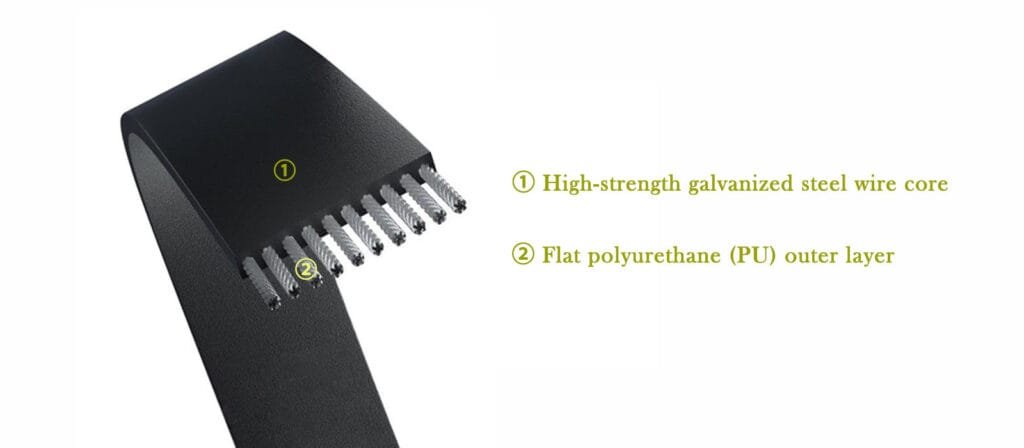
A steel belt consists of two main parts: a flat polyurethane (PU) outer layer and a high-strength galvanized steel wire core.

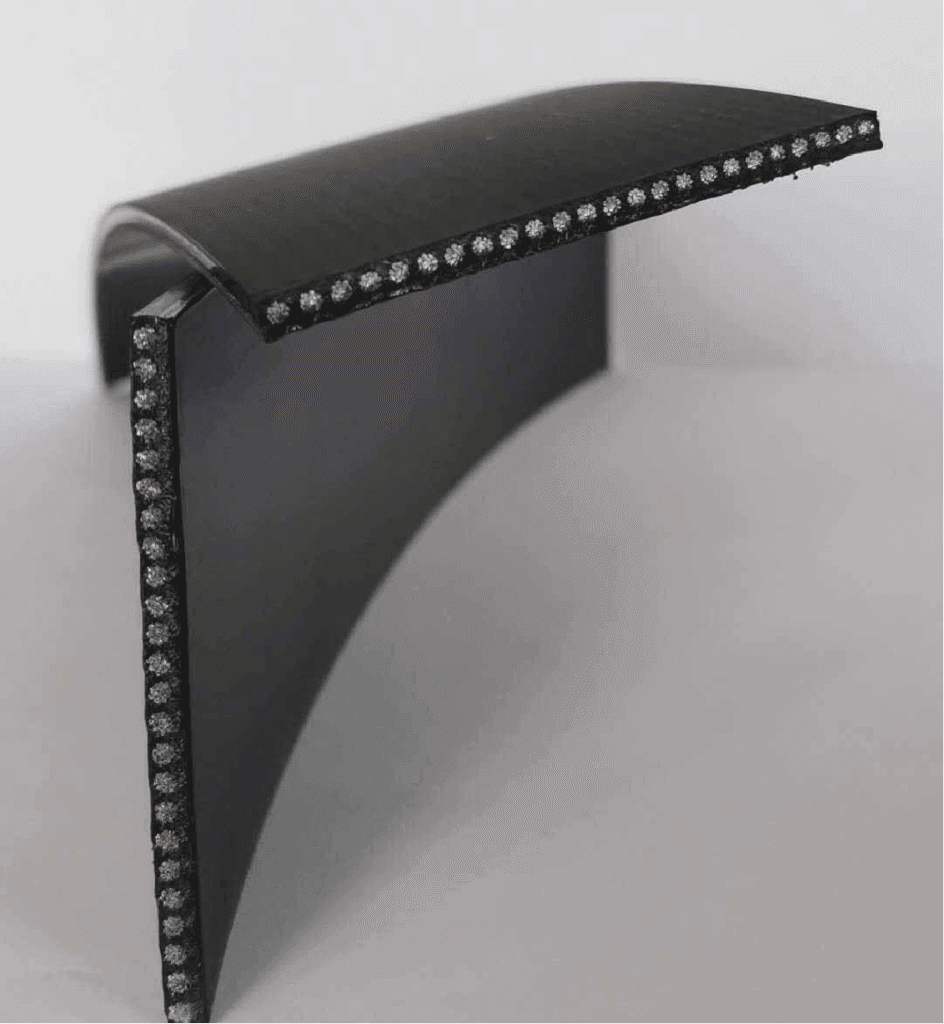
cross section of the flat steel belt showing steel cores inside the pu jacket

1. The Polyurethane (PU) Protective Layer

The outer PU jacket tightly wraps the steel cores. This flat design increases the contact area with the traction sheave, which boosts friction and ensures stable operation.

  • Outstanding Wear & Tear Resistance: Made from imported polyether-type TPU, it guarantees a long service life.
  • Extreme Weather Resistance: It maintains stable performance in extreme temperatures ranging from -40°C to 80°C.
  • Shock Absorption & Noise Reduction: It absorbs vibrations during operation, significantly lowering noise and making the ride much more comfortable.

2. High-Strength Galvanized Steel Core

  • Ultra-High Tensile Strength: A single steel wire can reach a tensile strength of over 1770 MPa, which far exceeds standard construction steel.
  • Excellent Corrosion Resistance: The surface is professionally galvanized to form a dense protective layer, providing superior rust prevention.
  • Extreme Flexibility: Using a special twisting process, the steel core easily adapts to small-diameter traction sheaves while running smoothly.

Part 3: Deep Dive into Core Dimensions and Structures

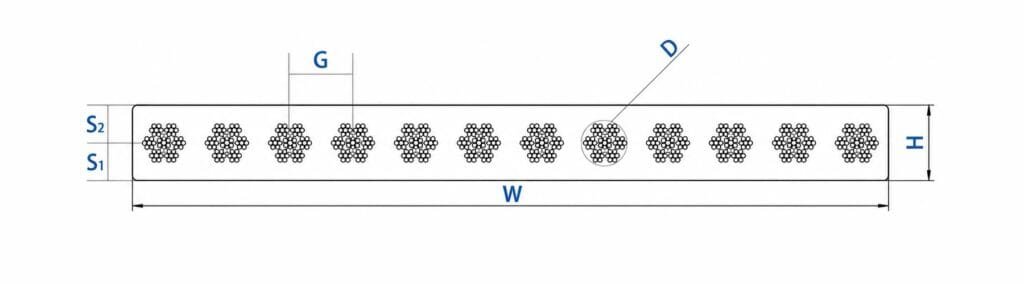
Manufacturing a reliable steel belt requires extreme precision. Based on online monitoring systems, four dimensions are strictly controlled:

specification of elevator steel belt dimensions
  • W / H (Width & Thickness): Tolerances must be exact. Every single meter of the belt must have a uniform profile.
  • G (Internal Steel Wire Gap): High-precision molds and stable tension control ensure the gap between the steel wires is exactly the same. Unstable gaps cause stress concentration, which leads to belt tearing.
  • S1 / S2 (Centering of Steel Cores): The belt must be perfectly symmetrical. The distance from the steel cores to both working surfaces must be identical. This ensures the PU thickness and bending stiffness are equal in both directions, reducing early failure risks.
  • D: The diameter of the precision steel wire.

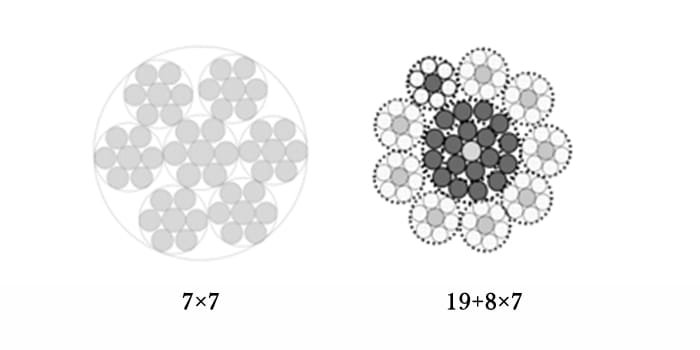
The 7×7 vs. 19+8×7 Core Structure

Different elevator brands use different internal wire twisting methods.

7x7 vs 19+8x7 cross section comparison

1. The 7×7 Structure (Typically used for OTIS)

  • Composition: 7 thin wires make a small strand -> 7 small strands make one wire core.
  • Total Wires: 49 wires per core.
  • Diameters: 1.6mm, 1.98mm, 2.15mm.
  • Features: This structure is highly mature and stable. It allows the PU material to penetrate deeply into the wire gaps.

2. The 19+8×7 Structure (Typically used for Schindler)

  • Total Wires: 75 wires per core.
  • Diameters: 1.73mm, 2.02mm.
  • Features: Because the individual wires are finer, the flexibility is excellent. However, the structure is looser, which makes it slightly more prone to “strand rising” if not manufactured perfectly.

Part 4: Manufacturing Process & Quality Tests

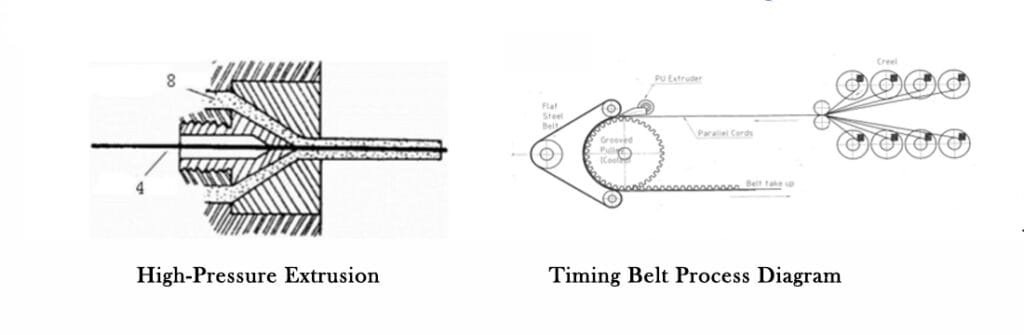
There are two main ways to manufacture these belts, but only one ensures maximum safety.

high pressure extrusion vs timing belt process diagram

High-Pressure Mold Extrusion Process (The Superior Method)

  • High cost and difficult to manufacture.
  • Strong bonding strength (highly anti-tear).
  • The PU is denser (highly anti-shear).
  • It easily guarantees that the steel cords are perfectly centered.

Timing Belt Extrusion Process (The Inferior Method)

  • Low cost, easy for standard timing belt makers to produce.
  • The PU is applied with zero pressure, leading to poor bonding and easy tearing.
  • The PU is loose and lacks shear resistance.
  • The steel cords often drift to one side, breaking the centering rule.

The “100% Recovery” Tests

Before a belt leaves the factory, it must pass rigorous physical tests:

  • Bending (Warping): When laid flat, the edges of the belt should not warp or lift more than 0.5mm. If it warps, the PU on the top and bottom are under different compression states, which makes installation difficult.
  • Elasticity: When bent within limits and then released, the belt must recover 100% to its original straight state with no residual curve. Failure to bounce back means the internal steel structure has deformed or the PU bonding has failed.

Part 5: Comprehensive Brand Specifications

Different elevator brands have specific naming conventions and part numbers. Below is the ultimate lookup guide.

1. OTIS Elevator Belts (Prefix: AAA717)

Otis belts are mostly used in their Gen2® elevator series. The suffix distinguishes the specs and the original supplier. Note: Models with the same specs are fully interchangeable.

Part NumberWidthThicknessCoresCore StructureStrengthSurfaceWeightOriginal MakerNotes
AAA717X130mm3.0mm127×7 (1.6mm)32 KNFlat (Both sides)0.22 m/kgBruggReplaced W1
AAA717W130mm3.0mm127×7 (1.6mm)32 KN1-side V-Groove0.22 m/kgContiTechEarly model
AAA717AM230mm3.2mm107×7 (1.98mm)43 KNFlat (Both sides)0.23 m/kgBruggInterchangeable with AP2 & AJ2
AAA717AP230mm3.2mm107×7 (1.98mm)43 KNFlat (Both sides)0.23 m/kgEHCInterchangeable with AM2 & AJ2
AAA717AJ230mm3.2mm107×7 (1.98mm)43 KNFlat (Both sides)0.23 m/kgContiTechInterchangeable with AM2 & AP2
AAA717AD160mm3.0mm247×7 (1.6mm)64 KNFlat (Both sides)0.44 m/kgBruggReplaces R1
AAA717R160mm3.0mm247×7 (1.6mm)64 KN1-side W-Groove0.44 m/kgContiTechReplaced by AD1
AAA717AJ125mm3.2mm8-32 KNFlat (Both sides)0.19 m/kgContiTech 

(Additional Otis sizes include AJ4: 30mm/43KN, AJ5: 60mm/86KN, AP3: 30mm/43KN. Note: Bekaert, a famous wire rope manufacturer, supplies the ultra-thin steel wires for Otis CSB belts). Usage: AM2 is often designed for high-rise buildings, while AD1 is suitable for low-rise residential elevators.

2. Schindler Elevator Belts (PV Series)

Schindler specs are named logically. For example, in STM-PV30-1.73S-PU-42: PV30 is the 30mm width, 1.73S is the wire diameter, PU is polyurethane, and 42 is the KN strength.

Model / Part NumberWidthThicknessCoresStrengthStructureSurfaceRibs / Grooves
PV30-1.73S-PU-4230mm4.5mm1242 KN19+8×7 (1.73)V-Groove6 Ribs / 5 Grooves
PV30-2.530mm4.5mm642 KN7x12W (2.5)V-Groove-
PV40-1.73S-PU-5640mm4.5mm1656 KN1.73SV-Groove8 Ribs / 7 Grooves
PV40-2.540mm4.5mm856 KN7x12W (2.5)V-Groove-
PV50-1.73S-PU-7050mm4.5mm2070 KN1.73SV-Groove10 Ribs / 9 Grooves
PV50-2.550mm4.5mm1070 KN7x12W (2.5)V-Groove-
PV60-1.73S-PU-8460mm4.5mm2484 KN1.73SV-Groove12 Ribs / 11 Grooves
PV60-2.560mm4.5mm1284 KN7x12W (2.5)V-Groove-

3. Other Major Brands

BRUGG (BRUbelt®): Combines high-strength steel strands with high-tech polymers for higher load capacity with a smaller metal cross-section.

Product No.製品名Minimum Breaking StrengthCross Section [mm]Number of Steel CordsBelt Weight [g/m]
50611BRU belt 3,6N3,632 x 2,316123,51
50614BRU belt 9,0N9,025 x 2,31089,69
50601BRU belt 15,0N15,033 x 2,316125,05
50634BRU belt 32,0N32,030 x 3,012201,69
50618BRU belt 53,0N53,030 x 3,410252,0
50611BRU belt 64,0N64,060 x 3,024403,37
50623BRU belt 126,0N126,0100 x 3,042691,04
50610BRU belt 160,0N160,060 x 6,510986,9
50624BRU belt 218,0N218,0150 x 3,3481135,59

Megalinear (Megadyne P3.3): Available in standard, lightweight, and flame-retardant versions. Features black TPU, no gaps, fully sealed. Widths range from 25mm to 60mm, using both S-twist and Z-twist galvanized cores.

Steel BeltMinimum Breaking Strength [kN]Width [mm]Thickness [mm]Number of Steel Cords
25 P3.341.6253.38
30 P3.3 Lightweight Version41.6303.38
30 P3.352303.310
36 P3.362.4363.312
40 P3.367.6403.313
50 P3.383.2503.316
60 P3.3104603.320

Part 6: Steel Belt vs. Wire Rope Comparison

Why is the industry making the switch? Look at the hard numbers.

FeaturePolyurethane Steel BeltTraditional Steel Wire Rope
安全性High safety factor (12x+). Flat structure prevents slipping and derailment.Lower safety factor. Prone to slipping or jumping out of grooves.
Running NoiseVery quiet (reduces noise by 30% – 50%).Loud metal-on-metal friction sounds.
Energy ConsumptionLightweight, uses small sheaves, reduces energy by about 20%.Heavy, requires high driving energy.
LifespanDesigned for 15 – 20 years (2 to 3 times longer).Lasts 8 – 12 years. Prone to fatigue and rust.
メンテナンスLubrication-free, simple, low cost.Requires regular oil lubrication, messy, high cost.
Space RequiredPerfect for Machine Room-Less (MRL) designs, saves shaft space.Requires larger machine rooms and more shaft space.

Part 7: Calculation Formulas for Steel Belts

If you are planning an installation or ordering belts, here is how to calculate exactly what you need.

1. Strength Calculation

Formula: Max Load (Car Dead Weight + Max Payload) × Safety Factor = Required Belt Strength Example: If an elevator car weighs 400KG, the max payload is 400KG, and the safety factor is 12: Total Load = 800KG × 12 = 9600KG (9.6 Tons). A 32KN belt can hold roughly 3.2 Tons. Therefore, you need three 32KN belts, or two 48KN belts to handle the 9.6-ton load safely.

2. Length Calculation

  • If you have engineering drawings: Traction rope length + 2 meters (extra for rope attachments).
  • If you do not have drawings (Estimation Formula): (Total Shaft Height – Pit Depth – Car Height + Car Width + Traction Machine Height + 3.5m redundancy) × 2
  • Golden Rule: The belt length can be longer, but never shorter! Any extra 2-3 meters can easily be rolled up and secured with zip ties at the attachment end.

Part 8: Maintenance & Scrap Standards

Never compromise on safety. A steel belt must be scrapped immediately if any of the following occur:

  1. Cracks, indentations, sharp bends, punctures, or bulges appear on the PU surface.
  2. Any single wire strand inside the belt breaks.
  3. Surface wear causes the internal steel wires to become exposed.
  4. Severe corrosion or rust appears on the surface.

Standard Replacement Workflow:

  • Whole Set Principle: You must replace the entire set of belts at once. Mixing old and new belts is strictly prohibited to ensure even tension.
  • Exact Match: The replacement must match the original specifications exactly.
  • Professional Operation: Replacement must only be done by certified personnel following safety codes.

Part 9: Packaging and Logistics

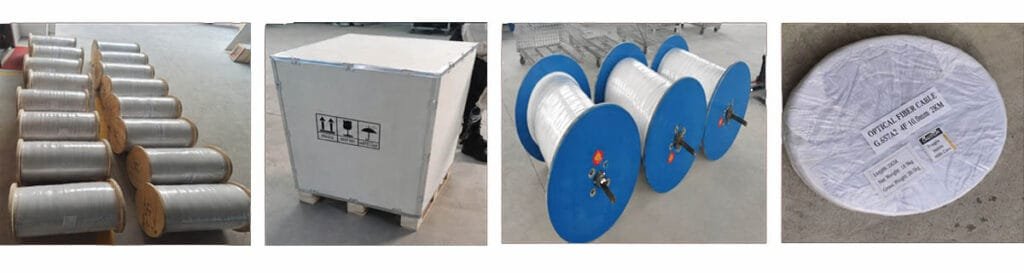
When ordering belts, logistics planning is crucial. Belts are shipped on wooden wheels. Here is the size and weight reference chart:

Wooden Wheel Size (mm)Wheel WeightPallet WeightCapacity (30mm Belt)Capacity (60mm Belt)
900 x 900 x 106045 KG15 KG2000 Meters1000 Meters
700 x 700 x 85015 KG7.5 KG1100 Meters550 Meters
600 x 600 x 5307.5 KG7.0 KG700 Meters350 Meters
600 x 600 x 4307.0 KG-600 Meters300 Meters
500 x 500 x 5306.0 KG-500 Meters250 Meters
500 x 500 x 4306.0 KG-400 Meters225 Meters

(Note: The smallest wooden wheel can hold 450 meters of 30mm belt, or 225 meters of 60mm belt).

elevatoe traction belts wooden wheel and box packaging photos

Why Choose POTENSI for Your Elevator Parts?

Finding the right replacement parts doesn’t have to be hard. At ポテンシ, we are your true one-stop elevator parts supplier.

With over 20 years of experience in the elevator industry, we know exactly what it takes to keep your systems running safely. Because we work closely with multiple top-tier elevator brands, we can offer you two massive benefits: lightning-fast supply そして highly competitive prices.

Whether you need Otis AAA717 steel belts, Schindler PV series, or any other elevator components, we have you covered.

Ready to get the best parts for your lift system? Contact the POTENSI team today for a quick quote! We are here to help.


結論

Elevator traction steel belts represent the future of vertical transportation. By understanding the structural differences like the 7×7 and 19+8×7 cores, matching the exact Otis AAA717 or Schindler PV specs, and following strict scrap and replacement guidelines, you can ensure your elevator systems run safely, quietly, and efficiently for decades.

ポテンシロゴ
お客様のプライバシーを尊重し、お客様の情報を共有することはありません。