
Cinta de tracción del ascensor, también conocido como Cinta transportadora de acero para ascensores, es utilizado con diferentes nombres por diversas marcas de ascensores. KONE y TK Elevator suele denominarse Correa de suspensión para ascensores, mientras que Otis suele utilizar los términos Cinta transportadora plana de acero para elevadores o Correa para ascensor Gen2.
Si trabajas en el sector de los ascensores, sabrás que la tecnología de tracción está cambiando. Los cables de acero redondos tradicionales están siendo sustituidos progresivamente por Correas de acero compuestas para tracción de ascensores (a menudo denominadas simplemente «cintas de acero para elevadores» o «cintas de tracción de acero para elevadores»).
Pero, ¿qué es lo que contienen exactamente estas correas? ¿Cómo se calcula la longitud necesaria? ¿Cuál es la diferencia entre una correa Otis y una Schindler? En esta guía exhaustiva, no dejaremos ningún aspecto sin tratar. Abordaremos todo, desde la estructura del producto y las especificaciones de las marcas hasta las fórmulas de cálculo y la logística de embalaje.
En cinta transportadora de acero para ascensores Es un componente plano y compuesto que se utiliza en los ascensores accionados por tracción. Conecta la cabina del ascensor con el contrapeso y transmite la potencia desde la máquina de tracción para lograr un desplazamiento vertical suave.
En pocas palabras, una correa de acero es la versión mejorada que sustituye al cable metálico. Se trata, básicamente, de varios cables metálicos recubiertos con una capa de caucho o poliuretano (PU), lo que le confiere su característica forma plana.
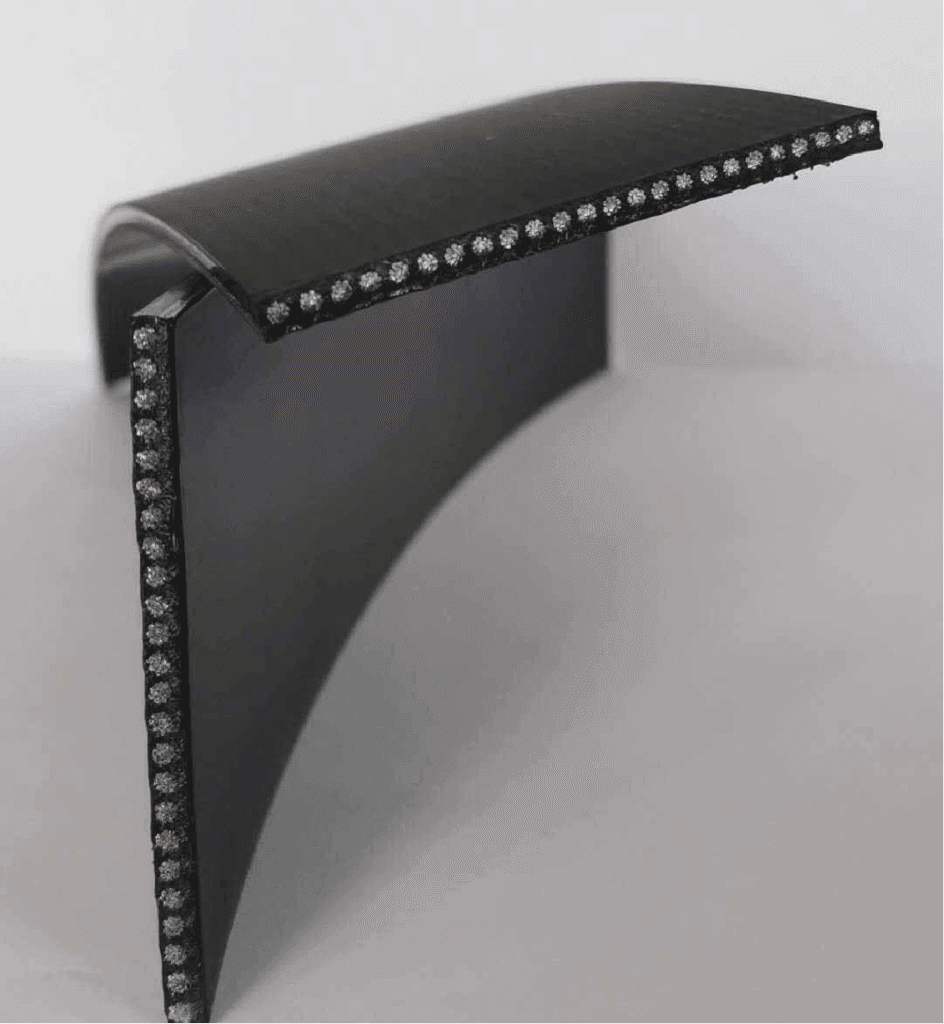
La realidad del mercado: Aunque las principales marcas de ascensores, como Otis y Schindler, utilizan estas correas, estas son fabricadas por marcas de componentes de primer nivel, como ContiTech (Alemania) y Brugg (Suiza). En el mercado actual, muchos compradores optan por correas de recambio de alta calidad. Estas soluciones de recambio ofrecen exactamente el mismo rendimiento que las piezas originales, pero a un precio muy competitivo.
Una correa de acero consta de dos partes principales: una capa exterior plana de poliuretano (PU) y un núcleo de alambre de acero galvanizado de alta resistencia.
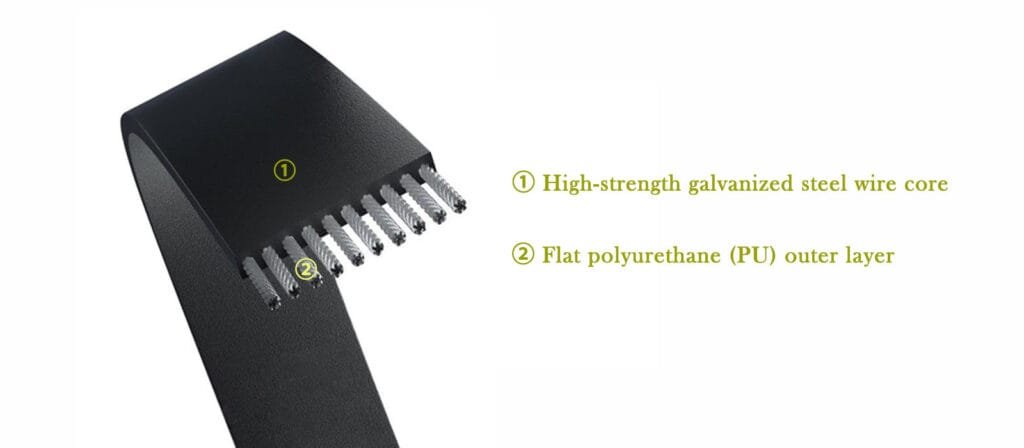
La cubierta exterior de PU envuelve firmemente los núcleos de acero. Este diseño plano aumenta la superficie de contacto con la polea de tracción, lo que potencia la fricción y garantiza un funcionamiento estable.
La fabricación de una cinta de acero fiable requiere una precisión extrema. Mediante sistemas de control en línea, se supervisan rigurosamente cuatro dimensiones:
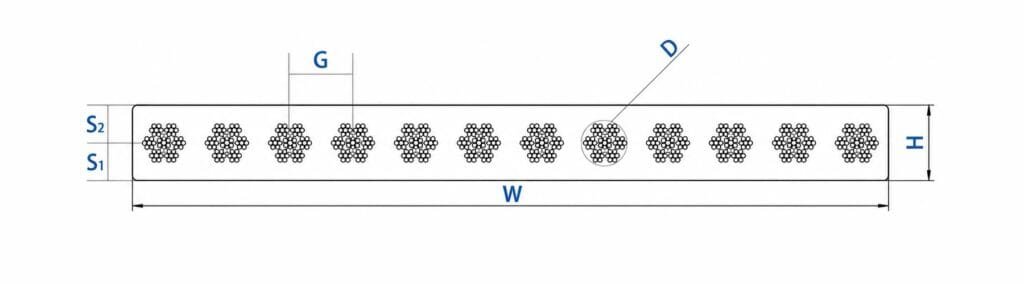
Las distintas marcas de ascensores utilizan diferentes métodos de trenzado de los cables internos.
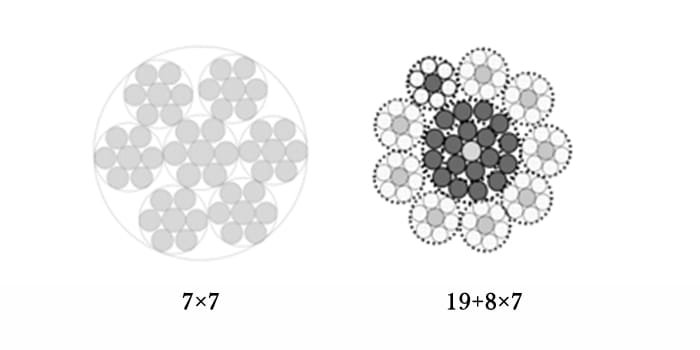
2. La estructura 19+8×7 (utilizada habitualmente para Schindler)
Existen dos formas principales de fabricar estas correas, pero solo una garantiza la máxima seguridad.
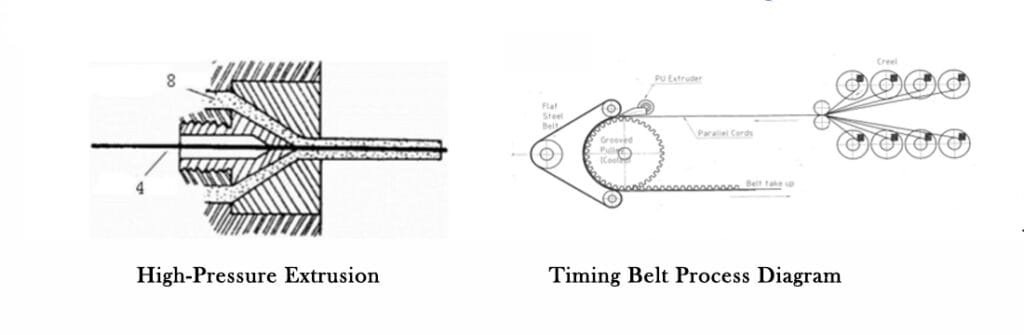
Proceso de extrusión por moldeo a alta presión (el método superior)
Proceso de extrusión de la correa de distribución (el método inferior)
Antes de que una correa salga de fábrica, debe superar rigurosas pruebas físicas:
Las distintas marcas de ascensores tienen convenciones de nomenclatura y referencias de piezas específicas. A continuación te ofrecemos la guía de consulta definitiva.
Las correas Otis se utilizan principalmente en su serie de ascensores Gen2®. El sufijo distingue las especificaciones y el proveedor original. Nota: Los modelos con las mismas especificaciones son totalmente intercambiables.
| Número de referencia | Ancho | Espesor | Núcleos | Estructura central | Fuerza | Superficie | Peso | Fabricante original | Notas |
| AAA717X1 | 30 mm | 3,0 mm | 12 | 7×7 (1,6 mm) | 32 KN | Liso (por ambos lados) | 0,22 m/kg | Brugg | Sustituido por W1 |
| AAA717W1 | 30 mm | 3,0 mm | 12 | 7×7 (1,6 mm) | 32 KN | Ranura en V en un lado | 0,22 m/kg | ContiTech | Modelo antiguo |
| AAA717AM2 | 30 mm | 3,2 mm | 10 | 7×7 (1,98 mm) | 43 KN | Liso (por ambos lados) | 0,23 m/kg | Brugg | Compatible con los modelos AP2 y AJ2 |
| AAA717AP2 | 30 mm | 3,2 mm | 10 | 7×7 (1,98 mm) | 43 KN | Liso (por ambos lados) | 0,23 m/kg | EHC | Compatible con AM2 y AJ2 |
| AAA717AJ2 | 30 mm | 3,2 mm | 10 | 7×7 (1,98 mm) | 43 KN | Liso (por ambos lados) | 0,23 m/kg | ContiTech | Compatible con AM2 y AP2 |
| AAA717AD1 | 60 mm | 3,0 mm | 24 | 7×7 (1,6 mm) | 64 KN | Liso (por ambos lados) | 0,44 m/kg | Brugg | Sustituye a R1 |
| AAA717R1 | 60 mm | 3,0 mm | 24 | 7×7 (1,6 mm) | 64 KN | Ranura en W en un solo lado | 0,44 m/kg | ContiTech | Sustituido por AD1 |
| AAA717AJ1 | 25 mm | 3,2 mm | 8 | - | 32 KN | Liso (por ambos lados) | 0,19 m/kg | ContiTech |
(Otros tamaños de Otis son: AJ4: 30 mm/43 kN, AJ5: 60 mm/86 kN, AP3: 30 mm/43 kN. Nota: Bekaert, un conocido fabricante de cables de acero, suministra los alambres de acero ultrafinos para las correas CSB de Otis). Modo de empleo: El modelo AM2 suele diseñarse para edificios de gran altura, mientras que el modelo AD1 es adecuado para ascensores residenciales de edificios de baja altura.
Las especificaciones de Schindler se denominan de forma lógica. Por ejemplo, en STM-PV30-1.73S-PU-42: PV30 corresponde a un ancho de 30 mm, 1,73S al diámetro del alambre, PU al poliuretano y 42 a la resistencia en KN.
| Modelo / Número de referencia | Ancho | Espesor | Núcleos | Fuerza | Estructura | Superficie | Nervaduras / Ranuras |
| PV30-1.73S-PU-42 | 30 mm | 4,5 mm | 12 | 42 KN | 19 + 8 × 7 (1,73) | Ranura en V | 6 nervaduras / 5 ranuras |
| PV30-2,5 | 30 mm | 4,5 mm | 6 | 42 KN | 7 × 12 W (2,5) | Ranura en V | - |
| PV40-1.73S-PU-56 | 40 mm | 4,5 mm | 16 | 56 KN | 1,73 S | Ranura en V | 8 nervaduras / 7 ranuras |
| PV40-2,5 | 40 mm | 4,5 mm | 8 | 56 KN | 7 × 12 W (2,5) | Ranura en V | - |
| PV50-1.73S-PU-70 | 50 mm | 4,5 mm | 20 | 70 KN | 1,73 S | Ranura en V | 10 nervaduras / 9 ranuras |
| PV50-2,5 | 50 mm | 4,5 mm | 10 | 70 KN | 7 × 12 W (2,5) | Ranura en V | - |
| PV60-1.73S-PU-84 | 60 mm | 4,5 mm | 24 | 84 KN | 1,73 S | Ranura en V | 12 nervaduras / 11 ranuras |
| PV60-2,5 | 60 mm | 4,5 mm | 12 | 84 KN | 7 × 12 W (2,5) | Ranura en V | - |
BRUGG (BRUbelt®): Combina cordones de acero de alta resistencia con polímeros de última generación para ofrecer una mayor capacidad de carga con una sección transversal metálica más pequeña.
| N.º de producto. | Nombre del producto | Resistencia mínima a la rotura | Sección transversal [mm] | Número de cordones de acero | Peso de la correa [g/m] |
| 50611 | Correa BRU de 3,6 N | 3,6 | 32 x 2,3 | 16 | 123,51 |
| 50614 | Correa BRU de 9,0 N | 9,0 | 25 x 2,3 | 10 | 89,69 |
| 50601 | Correa BRU de 15,0 N | 15,0 | 33 x 2,3 | 16 | 125,05 |
| 50634 | Correa BRU de 32,0 N | 32,0 | 30 x 3,0 | 12 | 201,69 |
| 50618 | Correa BRU de 53,0 N | 53,0 | 30 x 3,4 | 10 | 252,0 |
| 50611 | Correa BRU 64,0 N | 64,0 | 60 x 3,0 | 24 | 403,37 |
| 50623 | Correa BRU 126,0 N | 126,0 | 100 x 3,0 | 42 | 691,04 |
| 50610 | Correa BRU de 160,0 N | 160,0 | 60 x 6,5 | 10 | 986,9 |
| 50624 | Correa BRU 218,0 N | 218,0 | 150 x 3,3 | 48 | 1135,59 |
Megalinear (Megadyne P3.3): Disponible en versiones estándar, ligera e ignífuga. Fabricado en TPU negro, sin huecos y totalmente sellado. Los anchos oscilan entre 25 mm y 60 mm, y se utilizan núcleos galvanizados con trenzado en S y en Z.
| Correa de acero | Resistencia mínima a la rotura [kN] | Ancho [mm] | Espesor [mm] | Número de cordones de acero |
|---|---|---|---|---|
| 25 P3.3 | 41.6 | 25 | 3.3 | 8 |
| 30 P3.3 Versión ligera | 41.6 | 30 | 3.3 | 8 |
| 30 P3.3 | 52 | 30 | 3.3 | 10 |
| 36 P3.3 | 62.4 | 36 | 3.3 | 12 |
| 40 P3.3 | 67.6 | 40 | 3.3 | 13 |
| 50 P3.3 | 83.2 | 50 | 3.3 | 16 |
| 60 P3.3 | 104 | 60 | 3.3 | 20 |
¿Por qué está dando este giro el sector? Fíjate en las cifras concretas.
| Característica | Correa de acero recubierta de poliuretano | Cable de acero tradicional |
| Seguridad | Alto factor de seguridad (12x+). Su estructura plana evita los resbalones y los descarrilamientos. | Menor factor de seguridad. Propenso a resbalar o salirse de las ranuras. |
| Ruido de marcha | Muy silencioso (reduce el ruido entre 30% y 50%). | Ruidos fuertes de fricción entre metales. |
| Consumo energético | Es ligero, utiliza poleas pequeñas y reduce el consumo de energía en unos 20%. | Es pesado y requiere mucha energía para su conducción. |
| Esperanza de vida | Diseñado para durar entre 15 y 20 años (entre 2 y 3 veces más). | Dura entre 8 y 12 años. Es propenso a la fatiga y a la oxidación. |
| Mantenimiento | Sin lubricación, sencillo y económico. | Requiere una lubricación periódica con aceite, es sucio y tiene un coste elevado. |
| Espacio necesario | Ideal para diseños sin sala de máquinas (MRL), ya que ahorra espacio en el hueco del ascensor. | Requiere salas de máquinas más amplias y más espacio para los pozos. |
Si estás planeando una instalación o vas a hacer un pedido de correas, aquí te explicamos cómo calcular exactamente lo que necesitas.
Fórmula: Carga máxima (peso propio del vehículo + carga útil máxima) × factor de seguridad = resistencia necesaria de la correa Ejemplo: Si la cabina de un ascensor pesa 400 kg, la carga útil máxima es de 400 kg y el factor de seguridad es 12: carga total = 800 kg × 12 = 9 600 kg (9,6 toneladas). Una correa de 32 kN puede soportar aproximadamente 3,2 toneladas. Por lo tanto, necesitas tres Correas de 32 kN, o dos Correas de 48 kN para manejar con seguridad una carga de 9,6 toneladas.
Nunca se debe transigir en materia de seguridad. Una correa de acero debe desecharse inmediatamente si se da alguna de las siguientes circunstancias:
Flujo de trabajo estándar de sustitución:
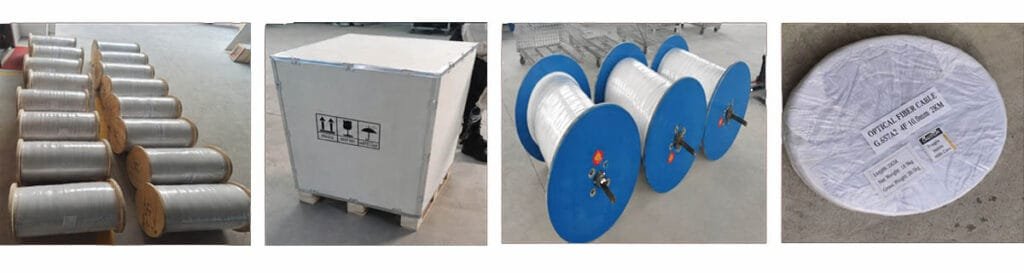
A la hora de realizar un pedido de correas, la planificación logística es fundamental. Las correas se envían sobre rodillos de madera. A continuación se muestra la tabla de referencia de dimensiones y peso:
| Tamaño de la rueda de madera (mm) | Peso de la rueda | Peso del palé | Capacidad (cinta de 30 mm) | Capacidad (cinta de 60 mm) |
| 900 x 900 x 1060 | 45 kg | 15 kg | 2.000 metros | 1 000 metros |
| 700 x 700 x 850 | 15 kg | 7,5 kg | 1 100 metros | 550 metros |
| 600 x 600 x 530 | 7,5 kg | 7,0 kg | 700 metros | 350 metros |
| 600 x 600 x 430 | 7,0 kg | - | 600 metros | 300 metros |
| 500 x 500 x 530 | 6,0 kg | - | 500 metros | 250 metros |
| 500 x 500 x 430 | 6,0 kg | - | 400 metros | 225 metros |
(Nota: La polea de madera más pequeña tiene capacidad para 450 metros de correa de 30 mm o 225 metros de correa de 60 mm).
Encontrar las piezas de recambio adecuadas no tiene por qué ser complicado. En POTENSI, somos tus auténticos proveedor integral de piezas para ascensores.
Con más de 20 años de experiencia en el sector de los ascensores, sabemos exactamente qué se necesita para que tus sistemas funcionen de forma segura. Gracias a nuestra estrecha colaboración con varias marcas de ascensores de primer nivel, podemos ofrecerte dos ventajas fundamentales: entrega ultrarrápida y precios muy competitivos.
Tanto si necesitas Correas de acero Otis AAA717, la serie PV de Schindler o cualquier otra componente de ascensors, nosotros nos encargamos de todo.
¿Estás listo para conseguir las mejores piezas para tu sistema de elevación? ¡Ponte en contacto con el equipo de POTENSI hoy mismo para obtener un presupuesto rápido! Estamos aquí para ayudarte.
Las correas de tracción de acero para ascensores representan el futuro del transporte vertical. Si se comprenden las diferencias estructurales, como los núcleos 7×7 y 19+8×7, se respetan al pie de la letra las especificaciones exactas de Otis AAA717 o Schindler PV y se siguen unas estrictas directrices sobre desechos y sustitución, se puede garantizar que los sistemas de ascensor funcionen de forma segura, silenciosa y eficiente durante décadas.