
In traction elevators with a travel height above approximately 30 meters, the weight of the wire ropes shifts continuously as the car moves. An elevator compensation chain is installed to offset this shifting weight and keep the traction system in balance throughout the full travel range. This guide explains how an elevator compensation chain works, the elevator compensation chain function in the traction system, the common types available, how to select the right specification, and what to check before ordering.
An elevator compensation chain is a weighted flexible component installed between the bottom of the car and the bottom of the counterweight. It runs through the pit and moves in the opposite direction to the wire ropes above the traction sheave. As the car descends and more rope weight accumulates on the car side, the elevator compensation chain shifts an equivalent weight to the counterweight side, and vice versa.
This keeps the traction load more stable across the full travel height, reduces motor torque variation, lowers energy consumption, and contributes to smoother, safer operation.
Without an elevator compensation chain, rope weight imbalance grows with travel height. At approximately 30 meters or more, this imbalance can affect traction safety, particularly under emergency braking or at full load. Local standards and traction calculations determine the exact threshold for each project.
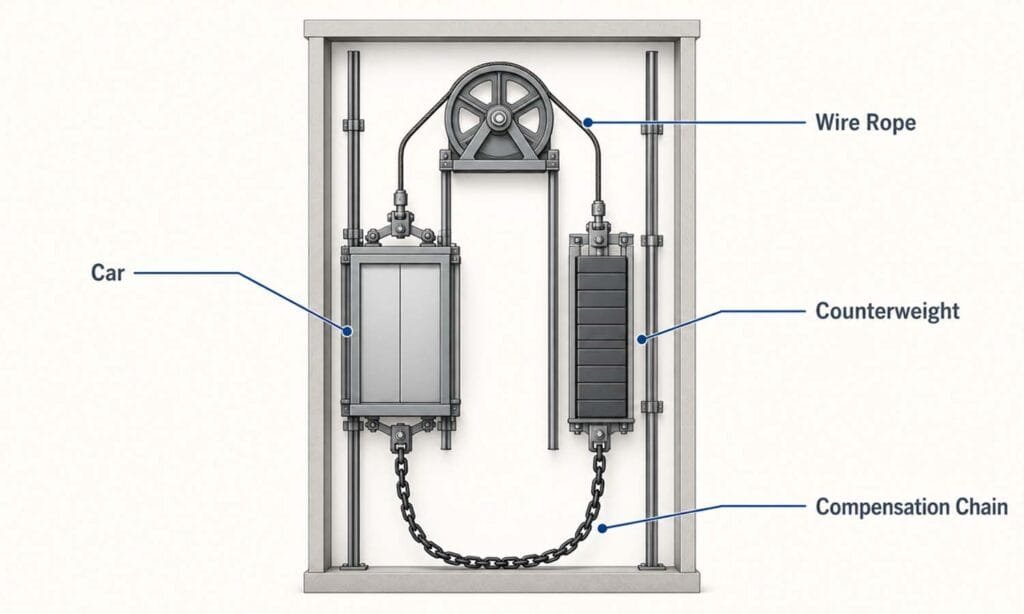
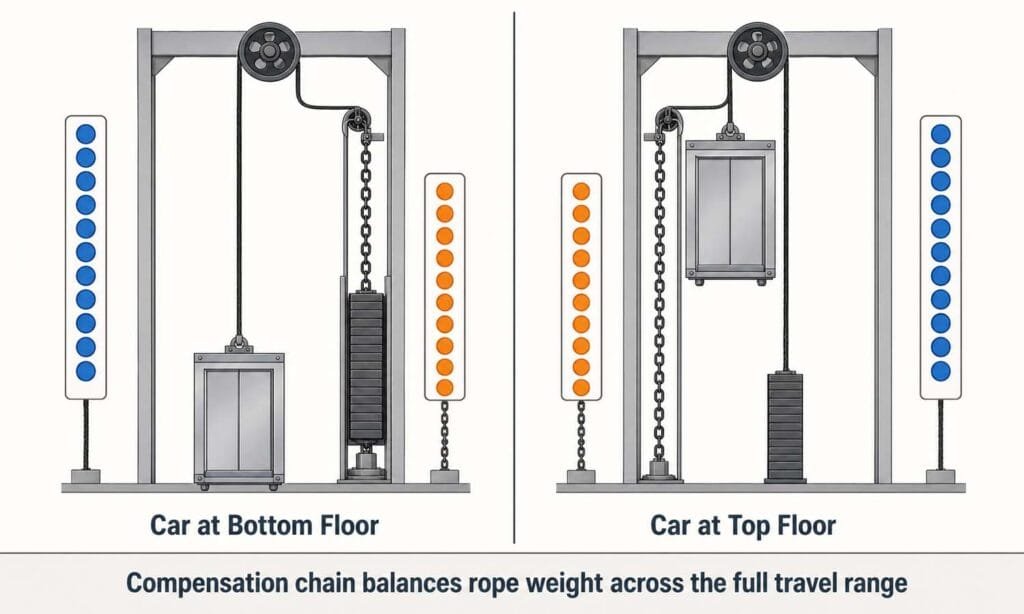
When the car is at the lowest floor, most of the wire rope weight sits on the car side. When the car reaches the top floor, that weight transfers to the counterweight side. The elevator compensation chain mirrors this movement from below: as rope weight on one side increases, an equivalent length of elevator compensation chain transfers to the other side.
The total load on each side of the traction sheave stays close to constant regardless of car position. This allows the motor and brake system to work against a predictable load, which benefits both efficiency and component service life.
Three main types of elevator compensation chain are in common use. They differ in construction, noise level, applicable speed, and service life.
| Tipo | Applicable speed | Noise level | Construction | Typical use |
|---|---|---|---|---|
| Rope compensation chain | ≤ 1.75 m/s | Alto | Iron chain with hemp rope fill | Older or low-speed installations |
| Plastic-covered compensation chain | ≤ 2.0 m/s | Medio | Iron chain with PVC sleeve | Low to medium speed, limited travel |
| Full plastic compensation chain | Up to 6.0 m/s | Bajo | PVC-encased chain, no exposed metal | Modern mid- and high-speed elevators |
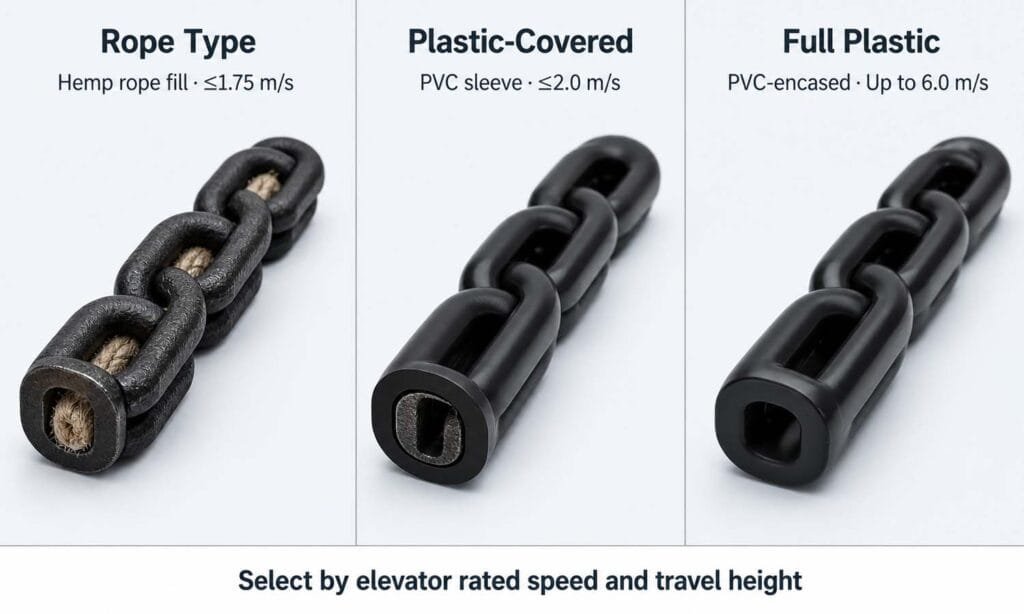
The rope compensation chain is one of the earliest elevator compensation chain designs. It consists of an iron chain with hemp rope threaded through the links to reduce metal-on-metal contact. Although it is low in cost, this elevator compensation chain type produces noticeable noise and vibration during operation. For this reason, rope compensation chains are rarely specified for new installations and are primarily found in older low-speed systems.
The plastic-covered elevator compensation chain, also called a PVC compensation chain, replaces the hemp rope fill with a PVC sleeve over the iron chain. This reduces noise compared with the rope type and improves appearance. However, flexibility and long-term durability are limited compared with full plastic designs. This elevator compensation chain type is typically specified for low-speed elevators with shorter travel heights.
The full plastic elevator compensation chain encases the chain links entirely in PVC. There is no exposed metal contact between links, which eliminates most noise and vibration. The PVC material also resists moisture, aging, and corrosion.
This elevator compensation chain type is suitable for elevators up to 6.0 m/s and is the standard choice for modern mid-rise and high-rise installations. Its combination of low noise, long service life, and wide speed compatibility makes it the most widely specified elevator compensation chain in current projects.
Selecting the correct elevator compensation chain requires calculating both the elevator compensation chain weight per meter and the required length.
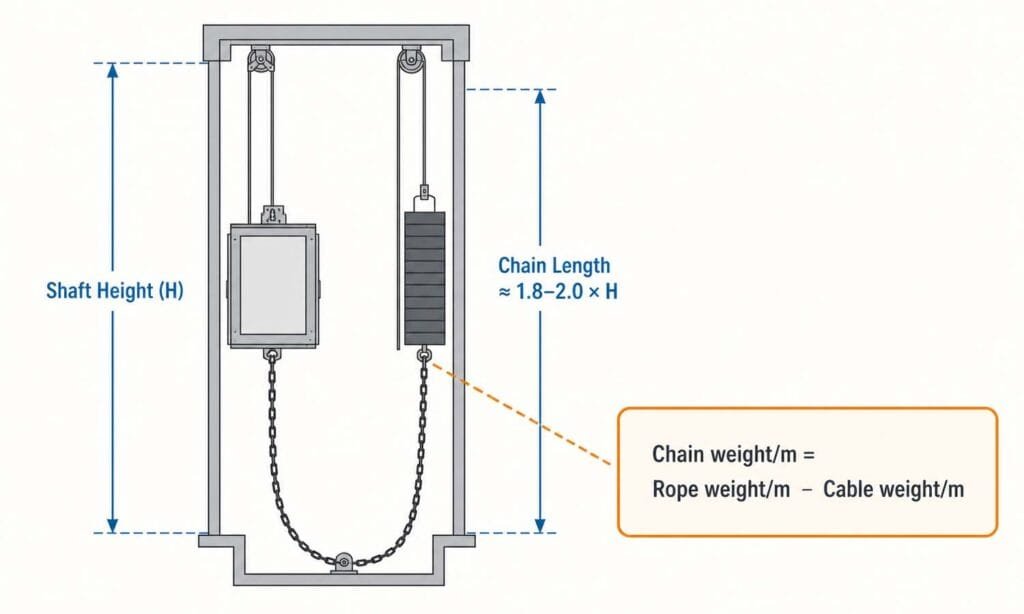
The elevator compensation chain must be long enough to accommodate the full car travel while maintaining the correct pit configuration. As a general reference, the required chain length is approximately 1.8 to 2.0 times the elevator shaft height, accounting for the loop from the car bottom, down through the pit, and up to the counterweight bottom.
For example, an elevator with a shaft height of 60 meters typically requires approximately 108 to 120 meters of compensation chain. This is a reference range only. The exact length depends on the pit depth, the bending radius of the guide arrangement, and the specific installation layout. A qualified engineer should confirm the length for each project.
The required weight per meter of the elevator compensation chain is determined by subtracting the weight per meter of the traveling cable from the weight per meter of the wire rope set. The result represents the net weight that the compensation chain must supply.
If the calculated weight falls within the tolerance range of two available products, both options may be technically acceptable. The final choice also depends on whether one or two compensation chains are used, which in turn depends on the buffer arrangement in the pit. If one buffer is used under the car and one under the counterweight, two lighter chains are often the practical choice. If two buffers are used under each, one heavier chain may be more appropriate.
Because elevator compensation chain calculation depends on the specific parameters of each project, the values above are for general reference. For a precise specification, provide the shaft height, rated speed, rated load, wire rope details, and traveling cable details to your elevator compensation chain supplier or engineer.
Correct elevator compensation chain installation is essential for safe and quiet operation. The following requirements apply to most standard installations.
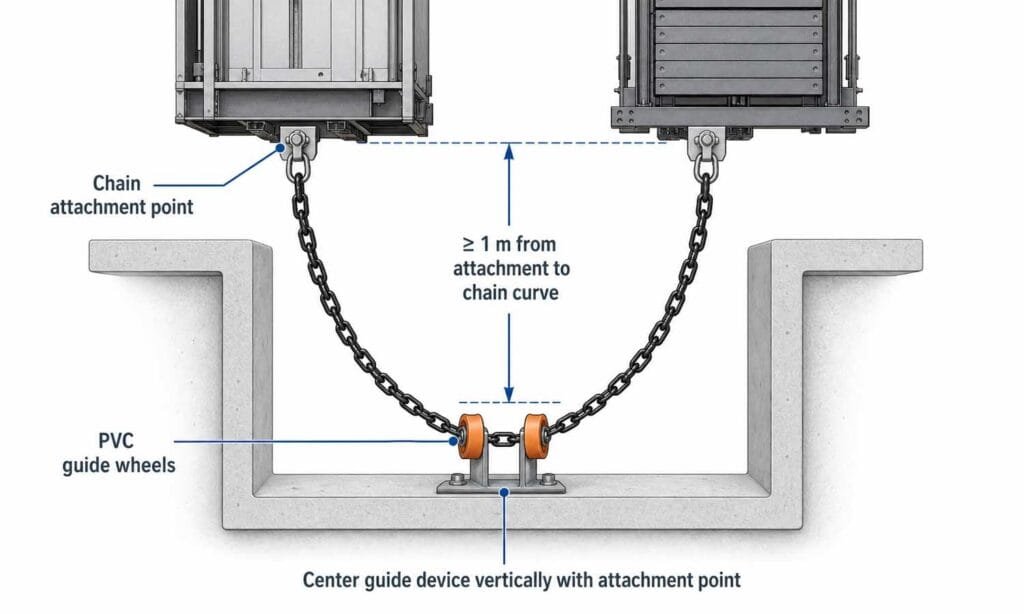
Both ends of the chain are connected to the bottom frame of the car and the bottom of the counterweight using appropriate suspension hardware. A guide device consisting of two PVC guide wheels is installed in the elevator pit as the elevator pit guide device to keep the chain on its intended path.
Installation follows the same basic principle, but the guide arrangement is more detailed because full plastic chains are typically used in higher-travel applications. A guide device is placed in the pit, positioned at least 1 meter above the lowest point of the chain’s bending radius. Two guides are used under each compensation chain: one mounted under the car via a bracket, and one mounted under the counterweight via a bracket.
Not all elevator compensation chains meet the same standard. Before placing an order, check the following.
A reliable elevator compensation chain manufacturer should be able to provide documentation for the following tests:
Ask the elevator compensation chain supplier to provide the corresponding test report for the specific product you intend to buy. Carrying out an elevator compensation chain inspection before acceptance helps confirm that the delivered product matches the agreed specification.
To receive an accurate quotation and ensure the product is compatible with your installation, provide the following:
An elevator compensation chain is a necessary component in any traction elevator where the travel height creates a significant rope weight imbalance. Selecting the right elevator compensation chain requires matching the type to the elevator speed, calculating the required length and weight per meter from system parameters, and confirming compatibility with the pit layout and buffer arrangement.
POTENSI supplies full plastic, plastic-covered, and rope elevator compensation chains for new installations and replacement projects. We can help you confirm the correct specification based on your elevator parameters. Contact POTENSI with your shaft height, speed, load, rope details, and traveling cable details to buy elevator compensation chain products with confirmed compatibility and receive a current quotation.