
When an escalator step chain needs replacing, the most common problem is not finding a supplier — it is confirming the correct specification before placing the order. An escalator step chain replacement ordered with the wrong pitch, link plate dimensions, or roller size may not fit correctly and can create installation problems.
This guide explains how to measure an escalator step chain, confirm the correct escalator step chain specification, cross-reference it to a known brand model, and calculate the number of links required for a full or partial escalator step chain replacement.
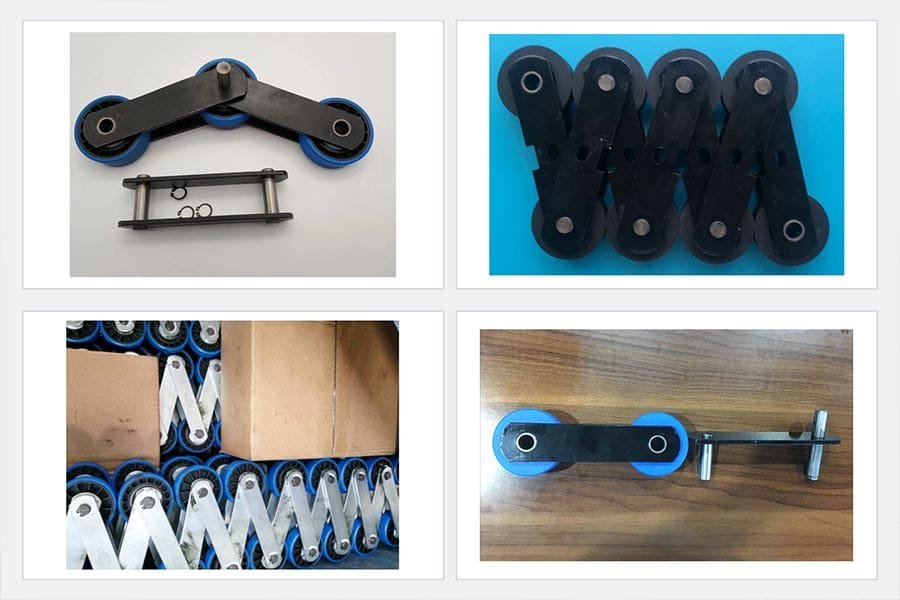
Most escalator step chain replacements in the maintenance market are not original equipment purchases. The escalator may be several years old, the original documentation may be unavailable, and the chain itself may have been replaced before with a compatible aftermarket product. In this situation, the correct approach is to identify the chain by its physical dimensions rather than by the escalator brand alone.
Two escalators from the same manufacturer may use different step chain specifications depending on the production year, model variant, or installation market. Ordering by brand name alone without checking the escalator step chain dimensions can result in an incorrect replacement.
The five parameters that define an escalator step chain are:
Together, these five parameters help identify the most likely compatible chain specification. When placing an escalator step chain replacement order, provide all five.
If the original chain is still on the escalator or a removed section is available, measure directly from the chain.
Escalator step chain pitch: Record the center-to-center distance between adjacent pins in millimetres. Because wear can affect the result, ask a qualified technician to check the measurement before the order is confirmed.
Common escalator step chain pitch values in the market are:
Link plate dimensions: Record the width and thickness of both the inner and outer link plates separately.
Pin diameter: Record the pin diameter in millimetres.
Roller: Record the roller outer diameter and width. If the roller has a visible bearing number, include it in the inquiry.
If direct measurement is not possible, take clear photographs of the chain from multiple angles — top, side, and end cross-section — and provide them to an escalator step chain supplier along with the escalator brand and any visible serial or contract numbers. For Otis escalators, a contract number found on the truss or on the acceptance certificate can be used to identify the correct step chain model.
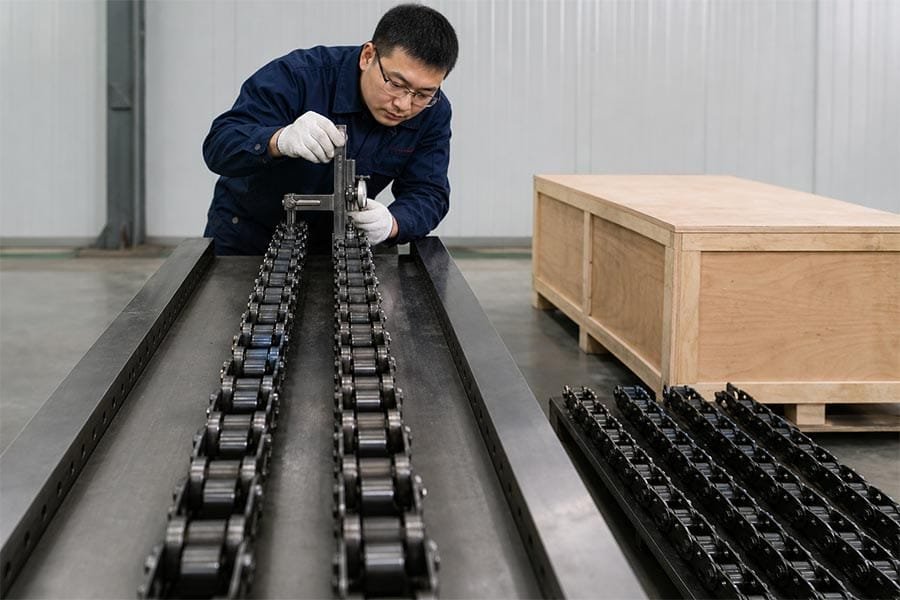
The table below lists the most common escalator step chain replacement specifications by brand. Use it to cross-reference your measured dimensions.
| Model | Pitch (mm) | Inner Plate | Outer Plate | Pin (mm) | Roller |
|---|---|---|---|---|---|
| T133A | 133.33 | 5×40 | 5×40 | 14.63 | 70×25, 6204 bearing |
| T133B | 133.33 | 5×35 | 5×30 | 14.63 | 70×25, 6204 bearing |
| T133C | 133.33 | 5×40 | 5×40 | 14.63 | 76×25, 6204 bearing |
| T133XA | 133.33 | 3×40 | 4×29 | 12.67 | 76×25, frame roller without bearing |
| T133XD | 133.33 | 5×50 | 5×50 | 20.00 | 80×25, 6206 bearing |
| Model | Pitch (mm) | Inner Plate | Outer Plate | Pin (mm) | Roller |
|---|---|---|---|---|---|
| T135.7 | 135.73 | 5×35 | 5×28 | 12.70 | 76.2×22 |
| T135.4D | 135.46 | 3×35 | 4×26 | 12.70 | 76.2×22 |
| T135.4 | 135.46 | 5×35 | 5×30 | 15/12.70 | 76.2×22 |
| T135.4A | 135.46 | 5×35 | 5×30 | 15/15 | 76.2×22, full-bearing |
| XJF131 | 131.33 | 5×40 | 5×40 | 14.63 | 70×25, with connecting arm |
| Model | Pitch (mm) | Inner Plate | Outer Plate | Pin (mm) | Roller |
|---|---|---|---|---|---|
| 13KV-C | 133.33 | 4×35 | 4×35 | 12.80 | 75×23.5, main/sub frame roller |
| 13RI-A | 133.33 | 4×35 | 4×35 | 12.80 | 75×23.5, main/sub frame roller |
| 10DH-C | 133.33 | 3×40 | 4×29 | 12.80 | 75×23.5, main/sub frame roller |
| Model | Pitch (mm) | Inner Plate | Outer Plate | Pin (mm) | Roller |
|---|---|---|---|---|---|
| T135A | 135 | 5×35 | 5×30 | 14.63 | 75×23.5, polyurethane, 6204 |
| T135B | 135 | 5×32 | 5×32 | 14.63 | 75×23.5, polyurethane, 6204 |
| Model | Pitch (mm) | Inner Plate | Outer Plate | Pin (mm) | Sleeve OD |
|---|---|---|---|---|---|
| T67A | 67.733 | 4.8 | 4.8 | 14.29 | 27 mm |
| T67B | 67.733 | 4.8 | 4.8 | 14.29 | 25 mm |
| T67D | 67.733 | 4.0 | 4.0 | 14.29 | 27 mm |
| Model | Pitch (mm) | Inner Plate | Outer Plate | Pin (mm) | Roller |
|---|---|---|---|---|---|
| C-12V | 68.4 | 4.0 | 4.0 | 12.80 | C-12V type |
| C-13T | 68.4 | 4.8 | 4.8 | 14.29 | C-13V/LG type |
| Model | Pitch (mm) | Inner Plate | Outer Plate | Pin (mm) | Roller |
|---|---|---|---|---|---|
| S650 | 135.46 | 5×40 | 5×40 | 14.63 | 76×25, 6204, polyurethane |
| S750 | 135.46 | 5×33 | 5×33 | 12.70 | 76×21.6, 6203, aluminium hub |
| Model | Pitch (mm) | Inner Plate | Outer Plate | Pin (mm) | Roller |
|---|---|---|---|---|---|
| T136.8A | 136.8 | 5×43 | 5×43 | 15.00 | 80×22, 6204, aluminium hub |
| T136.8B | 136.8 | 5×40 | 5×40 | 14.63 | 80×22, 6204, aluminium hub |
| T136.8C | 136.8 | 5×35 | 5×30 | 14.63 | 80×22, 6204, frame roller |
| T136.8D | 136.8 | 5×38 | 5×35 | 14.63 | 80×22, 6204, frame roller |
The correct escalator chain link count depends on the escalator step chain pitch and the number of installed steps. Count both the left and right chains when calculating a complete set for escalator step chain replacement.
Each step uses 6 links total — 3 on the left side chain and 3 on the right side chain.
To calculate the total links required for a full replacement:
Total links = number of steps × 6
Example: An escalator with 60 steps requires 60 × 6 = 360 links in total (180 per side).
Each step uses 12 links total — 6 on each side.
Total links = number of steps × 12
Example: A Mitsubishi escalator with 60 steps requires 60 × 12 = 720 links in total.
Each pallet uses 2 links — 1 on each side.
Total links = number of pallets × 2
If the number of steps is unknown but the chain length in metres is available (common for Schindler):
Links per side = (length in mm) ÷ pitch
Example: A Schindler chain 22.8 metres long with 133.33 mm pitch: 22,800 ÷ 133.33 = 171 links per side. A full replacement requires 342 links.
Replacing only part of the step chain may be considered for a specific maintenance requirement, but complete replacement is generally recommended in the internal ordering guidance. Ask a qualified technician to assess the existing chain and confirm whether the project requires a full or partial escalator step chain replacement.
The roller is the component most likely to determine how long an escalator step chain lasts in service. Three escalator step chain roller types are common:
Polyurethane roller: Used in several common specifications, including selected Thyssenkrupp and Hyundai models.
Frame roller (skeleton roller): Used across several Schindler, Otis, Kone, and Sigma specifications. Service life depends on the roller supplier and operating conditions. Internal product data lists approximately 10 years for Feigeli rollers and 4 to 5 years for Tongda rollers under normal conditions.
Aluminium hub roller: Listed in selected Sigma and Hyundai specifications.
The step chain assembly has a typical service life of 5 to 8 years under normal operating conditions, although actual life depends heavily on roller quality, operating load, environment, and maintenance. If rollers or other components show wear, a qualified technician should inspect the complete assembly and determine whether individual parts remain serviceable or a full escalator step chain replacement is needed.
Different escalator step chain specifications use different steel grades and link plate surface treatments. Common options in the product range include:
Include the indoor or outdoor operating environment in the escalator step chain order so the required surface treatment can be confirmed before production.
An accurate inquiry helps POTENSI confirm the escalator step chain specification before production and reduces the risk of receiving an incompatible chain. Send as much of the following information as possible:
POTENSI accepts inquiries for specifications associated with Schindler, Otis, Kone, Thyssenkrupp, Mitsubishi, Hitachi, Hyundai, Sigma, and other escalator brands. If measurements are incomplete, send clear photographs and all available equipment information for review. For some Otis escalators, the contract number on the truss or acceptance certificate can also support identification.
POTENSI does more than quote against a brand name. We ask for the chain measurements, photographs, step count, and installation environment needed to check the requested specification before production.
Coverage of common replacement specifications. Our product range includes common 67 mm, 68 mm, 131 mm, 133 mm, 135 mm, and 136 mm pitch families associated with Schindler, Otis, Kone, Thyssenkrupp, Mitsubishi, Hitachi, Hyundai, Sigma, and other escalator brands. This allows buyers to submit both a brand reference and physical measurements when requesting a quotation.
Detailed pre-order information check. Send us the pitch, link plate dimensions, pin diameter, roller size, step count, and clear photographs. We use these details to confirm the requested specification and calculate the required escalator chain link count. For certain Otis units, the equipment contract number can provide additional reference information.
Options for different project requirements. Available specifications include different roller constructions, bearing arrangements, link plate dimensions, and surface treatments. Chains may be ordered with or without step axles, depending on the existing product specification and replacement scope.
Practical lead times. Common Schindler-type chains may be available in 2–3 working days, while common Otis-type chains may require 5–7 working days. Kone, Thyssenkrupp, and chains supplied with axles usually require more time. The final delivery schedule is confirmed for each escalator step chain order because material availability and production workload can affect lead time.
After-sales support. POTENSI provides a one-year warranty for product-quality faults from the shipment date, subject to the agreed warranty terms. If a confirmed quality issue occurs within the warranty period, repair, replacement, or return support is available according to the case.
A successful escalator step chain replacement depends on three things: accurate identification, complete ordering data, and consistent production. Start by confirming the escalator step chain pitch, inner and outer link plate dimensions, pin diameter, and roller specification. Then calculate the required quantity from the step count or measured chain length.
POTENSI combines broad brand coverage with specification checking and flexible configuration. Whether you need an escalator step chain for Schindler, Otis, Kone, Thyssenkrupp, Mitsubishi, Hitachi, Hyundai, Sigma, or another brand, we can review the available measurements and photographs before production.
Send POTENSI your escalator model, chain dimensions, step count, installation environment, and clear product photos. We will help confirm the right escalator step chain and prepare a quotation for your replacement project.