Most elevator air conditioners are offered as one size fits most. That is worth testing.
Capacity is a calculation, not a guess. It depends on your car, your climate and your door traffic. Without the calculation, everyone is estimating, and the car shows it: cool at the vent, warm at the back.
What follows is how to choose an elevator air conditioner that actually fits: six things to settle before you order.
Elevator air conditioner sizing starts with a calculation. Ask for it, and hand over what it needs.
“Up to six passengers” is not a size. Ask which figures went into the number.
It is not a safety margin. It is a different set of problems.
It is louder. A large compressor cycling on and off is more noticeable in a small cabin than a smaller one running steadily.
It draws more current for less benefit. You cool a car that was never that hot, then the compressor stops and the humidity comes back.
It wears faster. Short cycling is harder on a compressor than steady running.
It costs more to buy and more to carry. The extra mass sits on the car, and the balance calculation has to absorb it.
So the elevator air conditioner capacity figure matters in both directions. Too small disappoints. Too large costs money every month, in a car nobody complains about. This is the part of how to choose an elevator air conditioner that most buyers skip.
In a hot climate, cooling is the whole job.
In a cold one it is half the job. A cooling-only unit is dead weight for four months, and a cold car is as unpleasant as a hot one. If your building sees freezing weather, specify heating as well, and check how it is produced. A reversing heat pump is a different machine from an electric element inside an air box.
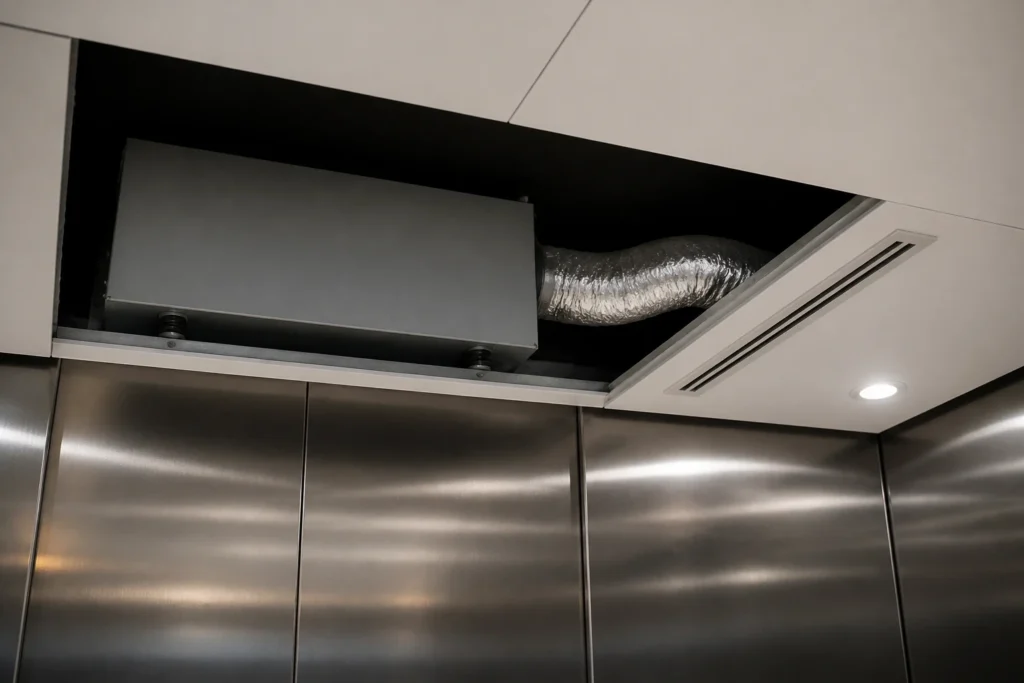
The mounting form of an elevator car air conditioner follows the car, not the catalogue.
Settle the position first. The shortlist writes itself afterwards.
This is the specification almost nobody checks, and the one passengers notice every ride.
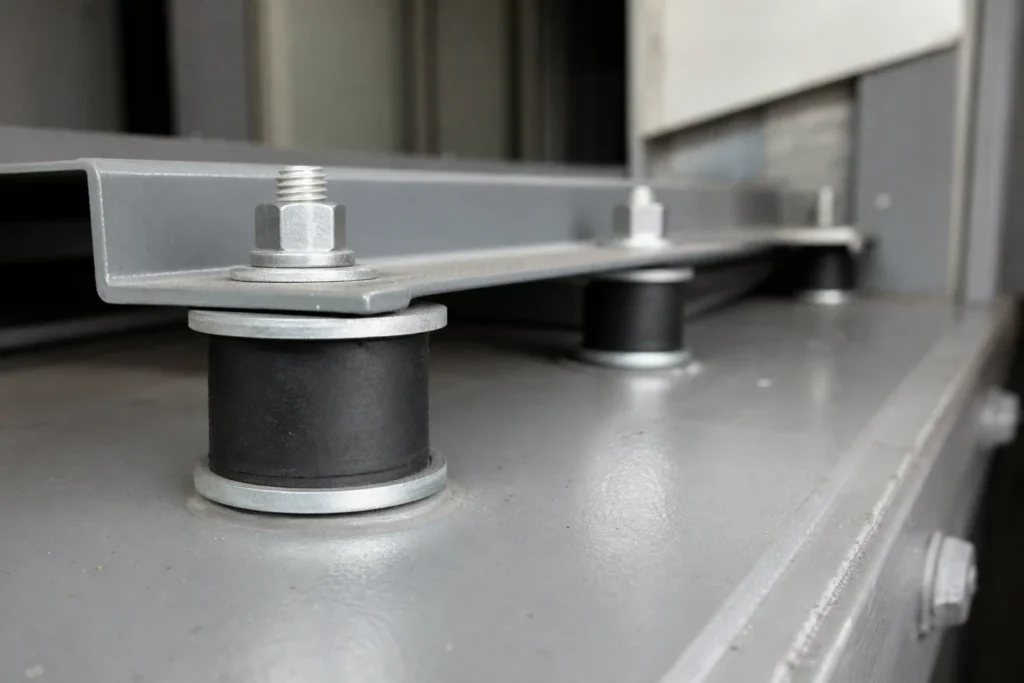
The unit is bolted to the car. Compressor vibration travels straight into the cabin structure unless it is isolated. Ask for the sound pressure level at a stated distance, and ask what the unit sits on.
A noise figure without a distance means little. The same unit reads very differently at one metre and at three. And if the isolator is not in the kit, the hum arrives with the unit.
An elevator air conditioning system makes water, and the car top is a poor place to keep it.
The minimum is a collection tray with a level sensor and a pump. A tray on its own is not enough. Neither is a fan that throws water at the condenser. Both overflow in a long humid season.
Ask what the unit does when the tank fills faster than it empties. A level sensor that stops the compressor is a different answer from a sensor that only lights a warning.
Every elevator ac unit has parts that wear. Filters clog, pumps fail and level sensors drift. These decide whether the unit still works in year three.
Ask for the filter part number, the pump part number and the sensor part number before you buy. If those numbers are not settled yet, ask when they will be. Consumables without a part number are hard to source in a hurry.
Ask one more thing. Are the filters washable or replaceable? Washable ones are cheaper to run and easier to get wrong.
Ask all six. Together they describe a unit you can still service in year three.
Send your car dimensions, the amount of glazing, your city and the door cycles you see at peak. We will come back with a capacity and the model that fits it.
بوتنسي supplies lift and escalator parts. What you get back is a number you can defend to whoever signs the order. The result is a car that feels the same on the tenth floor as on the ground. The machine behind it runs steadily instead of switching itself on and off all day.